Structured Assessment
QuickMind VR combines structured cognitive tasks with eye-tracking measures to support screening and referral for adults and older adults.
A dedicated VR and eye-tracking system for cognitive screening and rehabilitation in adults and older adults. Structured assessment tasks, personalized cognitive and motor training, and session records support care from the clinic to guided home practice.
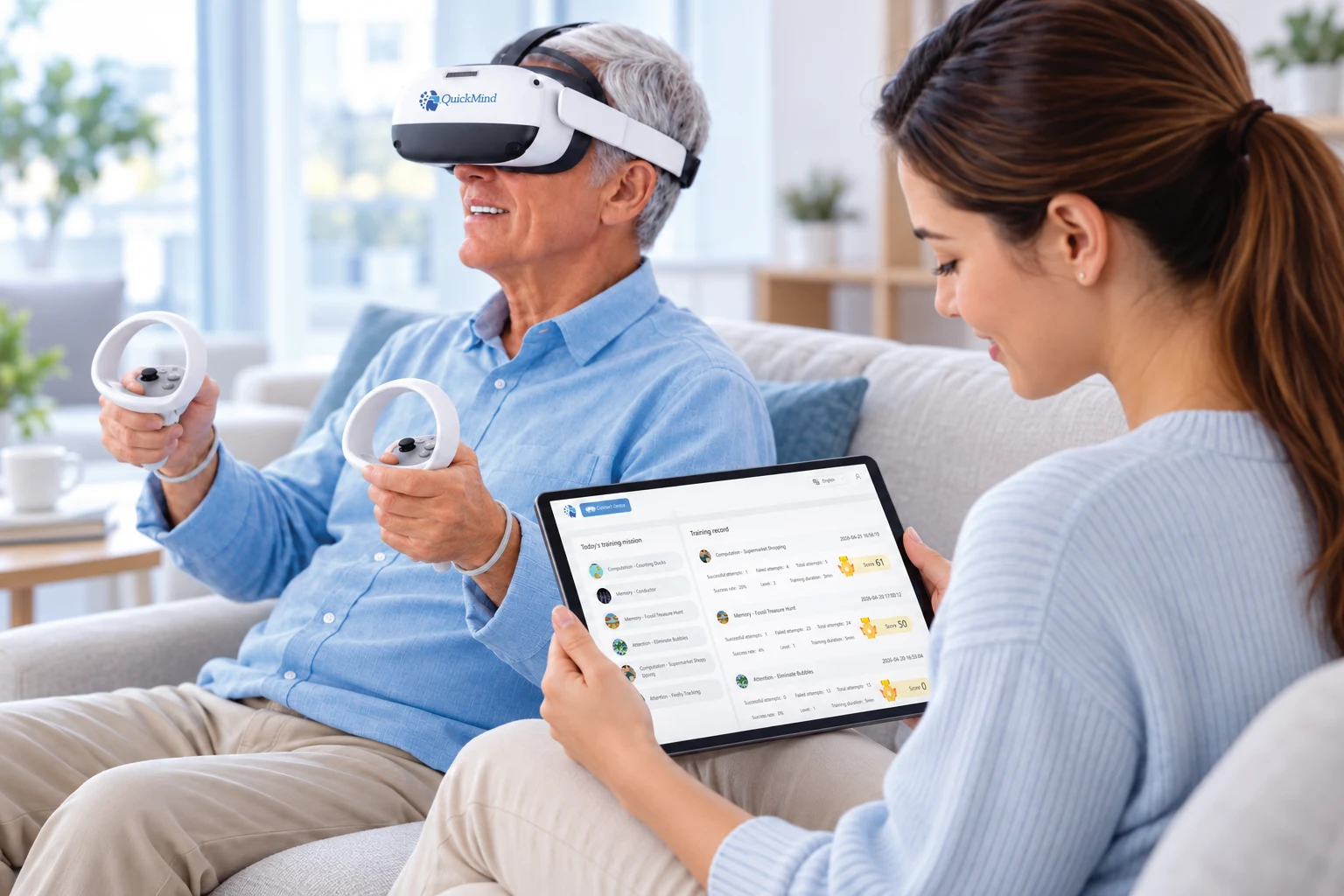 Home rehabilitation scenario
QuickMind VR combines structured cognitive tasks with eye-tracking measures to support screening and referral for adults and older adults.
QuickMind VR supports individualized cognitive and motor practice in clinical and supported home settings.
Session records help clinicians and caregivers review participation, task performance and the next training plan.
VR scenarios present structured visual and interactive activities in a controlled task environment.
Supported modules record gaze and task responses. Measurements are interpreted within the assessment protocol.
Professionals select suitable activities and difficulty, then review session records to adjust the plan.
Original VR platform examples.
Explore equipment configurations and application scenes from the product brochures.
See assessment, practice and reporting in action.
Explore QuickMind VRReview study methods, product relevance and limitations in the dedicated evidence library.
Use this checklist to scope a demonstration and technical evaluation with our team.
Share your country, care setting, intended users and preferred product modules.
Confirm the supported headset or tablet, training environment, user supervision and reporting needs.
Agree on local availability, deployment configuration, data handling, training, support and acceptance criteria.
Integration, hosting location, response times and service terms are confirmed for each project. This page does not promise a specific interface or installation time.
QuickMind VR uses a headset and cognitive tasks for assessment and training. QuickMind MRI analyzes brain MRI images. They are separate products that may be used within the same clinical pathway.
Explore QuickMind MRIA screening result can help identify people who need further assessment. It is not a standalone dementia diagnosis. Clinical history, examination and appropriate investigations remain part of the diagnostic pathway.
Read component-specific evidenceWe welcome conversations with healthcare providers, research institutions, and international distribution partners.